
Containment is a vital part of every surface preparation job, but its complexity can vary depending on circumstances such as job site needs, the material being removed (hazardous vs non-hazardous), and proximity to other activities, trade workers, pedestrians, or businesses.
For example, projects that involve hazardous materials or coatings, such as lead paint, require strict containment to meet EPA guidelines, especially on high-exposure structures such as bridges. Any breach of containment on these projects can cause serious consequences, fines, health, and environmental risks.
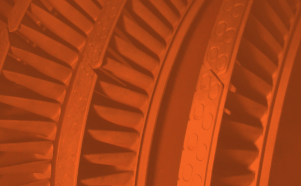
However, utilizing containment isn’t just about meeting regulations. It also plays a practical role in easing clean-up and protecting nearby operations such as ongoing manufacturing or other working tradespeople. It also helps to keep material away from sensitive equipment, rotating parts, and surfaces such as turbines or engines. Ultimately, the goal is to isolate abrasive blasting activity while managing potential dust and debris that is generated during the process, ensuring the safety of people, property, and the environment..jpg?width=264&height=352&name=701-IM-1215%20(1).jpg)
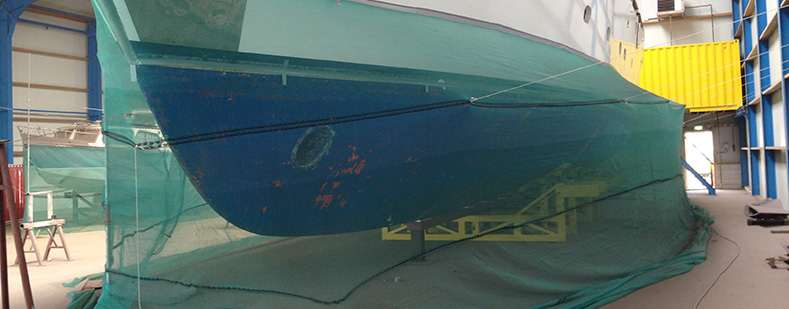
Materials that get used for containment can range anywhere from simple to intricate, depending on jobsite needs. Some contractors may incorporate containment like scaffolding, plywood, 6-mil poly (plastic sheeting), debris mesh or netting, heavy canvas, industrial grade tarps, or a mix of any of these. Regardless, dust collection and negative air equipment are essential additions in order to have air movement within the containment and keep the dust flowing away from both workers and other areas on the jobsite that the contractor is seeking to protect.
When wet blasting, ultra-high pressure water blasting, or vapor blasting, it’s important to have a plan for collecting fluid runoff and moisture, especially if blasters are removing hazardous material.
Using Sponge-Jet on surface preparation projects offers a unique advantage when it comes to containment, as opposed to other ordinary abrasive blasting processes.
-
Its low-dust generation allows for lower-cost air handling, as the containment systems don’t need to be as robust as they do with other abrasives, such as steel grit and garnet.
-
Its low-bulk density compared to other crystalline abrasives like coal slag and garnet can require less load on scaffolding, and therefore allow for less extensive designs.
-
Its low-rebound characteristics minimize destructive ricochet that can puncture or breech containment.
These traits are especially beneficial in sensitive environments and on jobsites where downtime isn't an option.
Some contractors will even design their containment systems to work with Sponge Media. By using containment to funnel the media to a central collection point, they are able to streamline the recycling process, which can be like having an extra set of hands on-site. Ultimately, this efficiency can reduce man-hours and costs while allowing for an overall cleaner and safer jobsite.
No matter the scale of the project, containment isn’t just a compliance box to check, it can also be a strategic tool.